
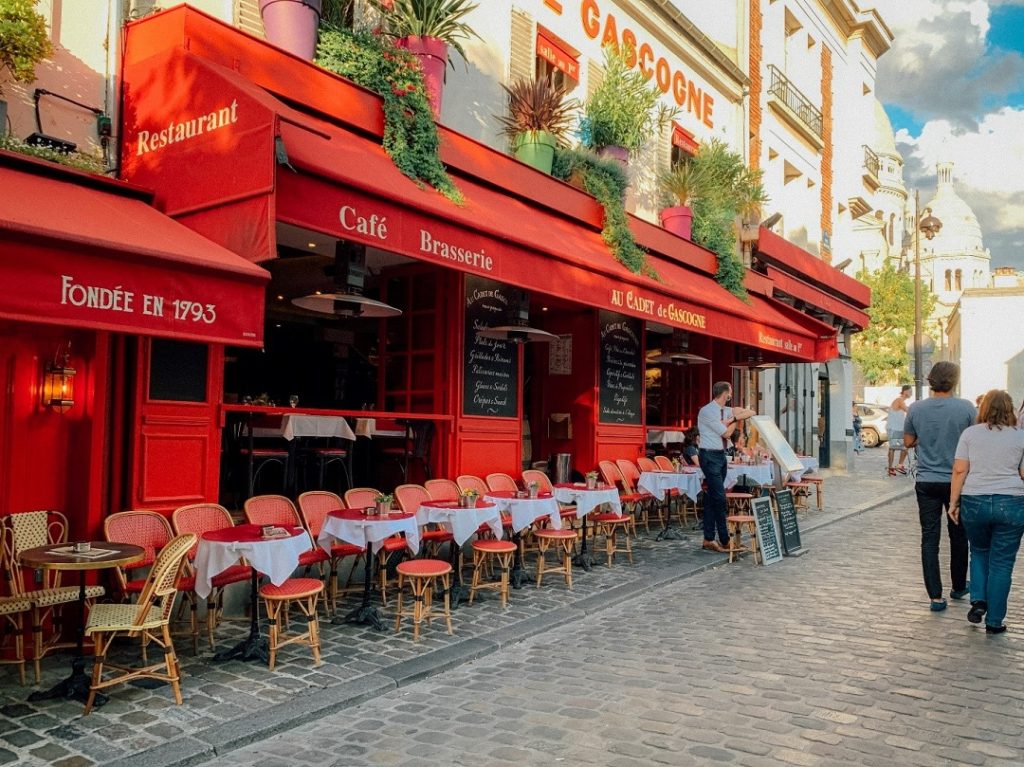
Mes amis, asseyez-vous et on commencera! (My friends, have a seat and we’ll begin!) To start, let’s set expectations properly so that this way you know more or less where we’re going and what your progress should look like, so that you’ll be motivated and find it easy to stay that way, and you’ll avoid being unnecessarily disappointed (hint: disappointment is just a veil concealing progress about to be realized). Here we go!
- You can do this! Remember, as long as you’re working on your French, you’re moving forward and that’s what counts! Even 5, 10 or 15 minutes a day, every other day, or once a week is adding to your vocabulary, grammar, speaking, and listening skills. Celebrate every moment doing this as a victory. My anecdote is that learning French is akin to going to workout – success is inside the gym, not outside, so as long as you open and step through the doors and then you do SOME type of activity inside the building, ANY type of activity at all . . . you are being successful and making progress!
- Learning French is simply a DECISION, not a COMMITMENT! I have to emphasize this repeatedly because many (many! MANY!) people approach this as a task, an obligation, a burden that they’re imposing upon themselves with unrealistic expectations of fluency . . . that’s all nonsense of course. This is FUN and it’s simply a decision that you’ve made, a decision that you can change your mind about anytime, for any reason, or for no reason at all. As an example, if you decide today that you’re going to focus on learning for 30 minutes and it doesn’t happen, NO PROBLEM – because tomorrow is another day and you can make another (separate) decision to spend 30 minutes on your French then! Or not. It doesn’t matter because learning French is not a commitment. It’s a joy that you can experience whenever you like simply by making a decision to do so!
- Embrace the journey that is learning the French language! Each day that you spend expanding your vocabulary, learning verb conjugations, understanding sentence structure, getting to the “why” of the language, your eyes will be opened even more to a beautiful world you weren’t even aware existed and you’ll understand what an incredible experience learning another language can be! Spoiler Alert here (just a little one): once you achieve an intermediate level of French, you’ll likely notice that fairly often around 50% of French words are unbelievably similar to their English counterparts! Very cool! But be aware of FAUX AMIS (“False Friends”), those words that are spelled identically or appear very similar to each other in both languages but have distinctly different meanings. Because of this, I sometimes think of my journey as a magnificent puzzle that I get to put together one piece at a time, and sometimes several pieces will fall together quickly and unexpectedly!
- Mistakes are a critical part of learning. Recognize and embrace them as your best teachers! You may know or have experienced this already in other parts of your life but believe me, you will learn WAY more from what you get wrong than what you breezed through on the first try! Granted, it’s not fun having to go through the process of learning a concept that doesn’t come easily but, once you do, you’ll truly understand it through and through and be much better prepared because of the time and effort that you put into learning it. Another point to remember, the French study their language for years and years and they STILL make tons of mistakes. So no one, not even the French, are going to hold you to some mythical and unattainable level of “fluency” when you speak the language. In fact, as you learn more and more French, you’ll start catching the French making mistakes in their own language! Which leads me to my next point . . .
- French is NOT a difficult language to learn. Or at least not any more difficult to learn than any other language. The only proof you need of that is to listen to Americans speak English (or, to see a slew of grammatical errors, just read their emails) and you’ll see immediately that we make mistakes all of the time in OUR OWN LANGUAGE . . . and nobody really cares or says anything about that! In fact, I’m not the best at English and I’m sure that as you’re reading this post you’ve noticed an error here and there that I’ve made – but it’s no big deal because we’re communicating and you can understand me! Side note, one of the things that I love the most about French is the Académie Française (the French Academy – more on this topic in a later blog post). The Académie Française makes the rules for the French language and is either the Protector of the French Language or the French Language Police, depending on your perspective (and it is a hotly debated topic, believe me). But regardless of how you feel about the Académie Française, if you’re a person who like rules, clear guidance on exceptions to those rules, and a wide array of instructions on just about every aspect of a language, French is probably an excellent choice for you!
- Americans lover France, the French people, and just about anything else French. You’ve made an excellent decision to learn French! Why? To Americans, the French language is elegant, romantic, and alluring! Funny note here, to the French, when you ask them if they are aware of how romantic their language sounds, they’ll usually say “Pas vraiment” (“Not really”) – which they say (obviously) because everyone they know speaks French so it’s no big deal to them . . . but it still cracks me up! And did you know that France is the #1 most visited country in the world, the #5 most visited country by Americans, the #2 most popular language Americans want to learn, the #5 most translated language in the world, and of course the #1 most beautiful spoken language in the world? Even at the beginner level, speaking French will bring a certain “je ne sais quoi” beauty to your inner soul!
- “How long will it take me to be fluent in French? I want to be able to speak with the locals when I go to Paris!” Ok, so setting aside the eternal question of “what is the definition of fluent” (which is an excellent question that I’ll also be addressing in a future blog post), you should expect:
– 1-2 years to learn enough vocabulary and verb tenses to be able to have a basic conversation in French. This is a BIG accomplishment and I guarantee you will be THRILLED to converse, understand, and be understood – in other words, communicate! You will absolutely be able to get around Paris, your friends will be very impressed, and the French will be thrilled that you’re making an effort to converse in their wonderful language!
– 2-4 years to have more advanced conversations and, generally speaking, understand the direction of a French conversation but maybe not every individual word. Native French speakers will undoubtedly understand what you are trying to say and graciously overlook your incorrect verb tenses, not-so-great word choice, slightly clunky sentence structure, and conversational pauses as you search your mind for the appropriate words to convey the thoughts that you wish to share. But you’re STILL SPEAKING FRENCH!
– 5-10 years for full fluency. Again, skipping over the definition of “what is fluent” and why that may or may not be necessary for what you want to accomplish, generally takes quite a bit of time. Unless you’re able to move to a Francophone (French-speaking) country and immerse yourself in the language, this will take about 5-10 years. But again, think about how long it took you to learn English (even as a child), then about how awesome you’ll feel 5-10 years from now when you’ve achieved “fluency”, and it seems like a pretty good way to spend your spare time in between now and then! - “What’s the best way to learn French?” As I alluded to above, immersion is definitely the best way to learn French, or any language for that matter. By immersion, I mean moving to a French-speaking country and being “immersed” in the language so that essentially you have no other choice but to learn the language in order to be able to get around. Of course, this isn’t a realistic option for most of us but I did want to address it because it’s one of the first questions I’m always asked. However, I assure you that you’ll be able to speak, read, and write French with the proper amount of time, effort, and motivation.
- “So, after immersion, what’s the next best way to learn French?” Glad you asked! This all depends on your learning style, how you prefer to absorb information, and is also an integral part of your language-learning journey. There is no one correct answer, the answer is different for each person, and that answer can change and evolve as your language proficiency improves. Speaking of my own personal experience, traditional French textbooks used in most high school and university classes were only marginally effective – I didn’t like them that much because I needed more interaction, although I do find them to be excellent reference tools. So, in addition to textbooks (again, I definitely use them), I employ a wide variety of online apps and dictionaries; reading French books, magazines, and newspapers; watching television shows and films in French; listening to French radio broadcasts and French language podcasts; and, of course, having conversations with native French-speakers whenever possible. In a nutshell, whatever works best for you and keeps you most engaged is the best way.
- Être, Avoir, and Aller – Three Verbs That You Should Master As Soon As Possible. Trust me on this, if you’re just starting to learn French, you will dramatically accelerate your learning and save yourself an enormous amount of frustration if you master the three French verbs être (to be), avoir (to have) and aller (to go) and all of their conjugations and tenses. Why did no one tell me this? I don’t know but I’m sharing it with you because SO MANY conversations revolve around these three actions (I am, you have, we will be going, etc.) as well as most French verbs INCLUDE the use of être and avoir in the conjugation of some or several of their tenses. If you get this down sooner rather than later, you will fly through a good part of learning French that gives most English speakers fits. You are welcome (in anticipation of you thanking me later).